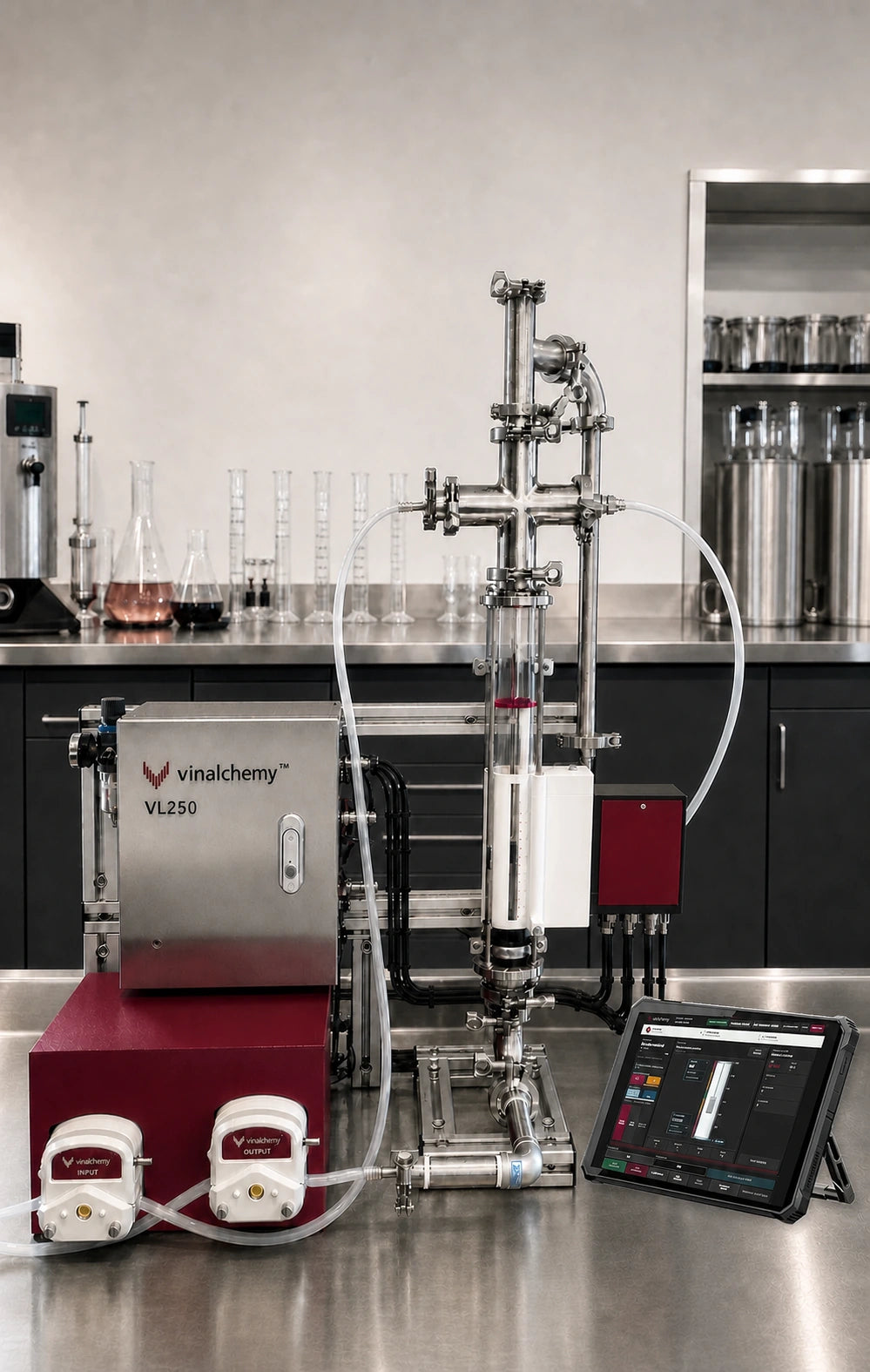
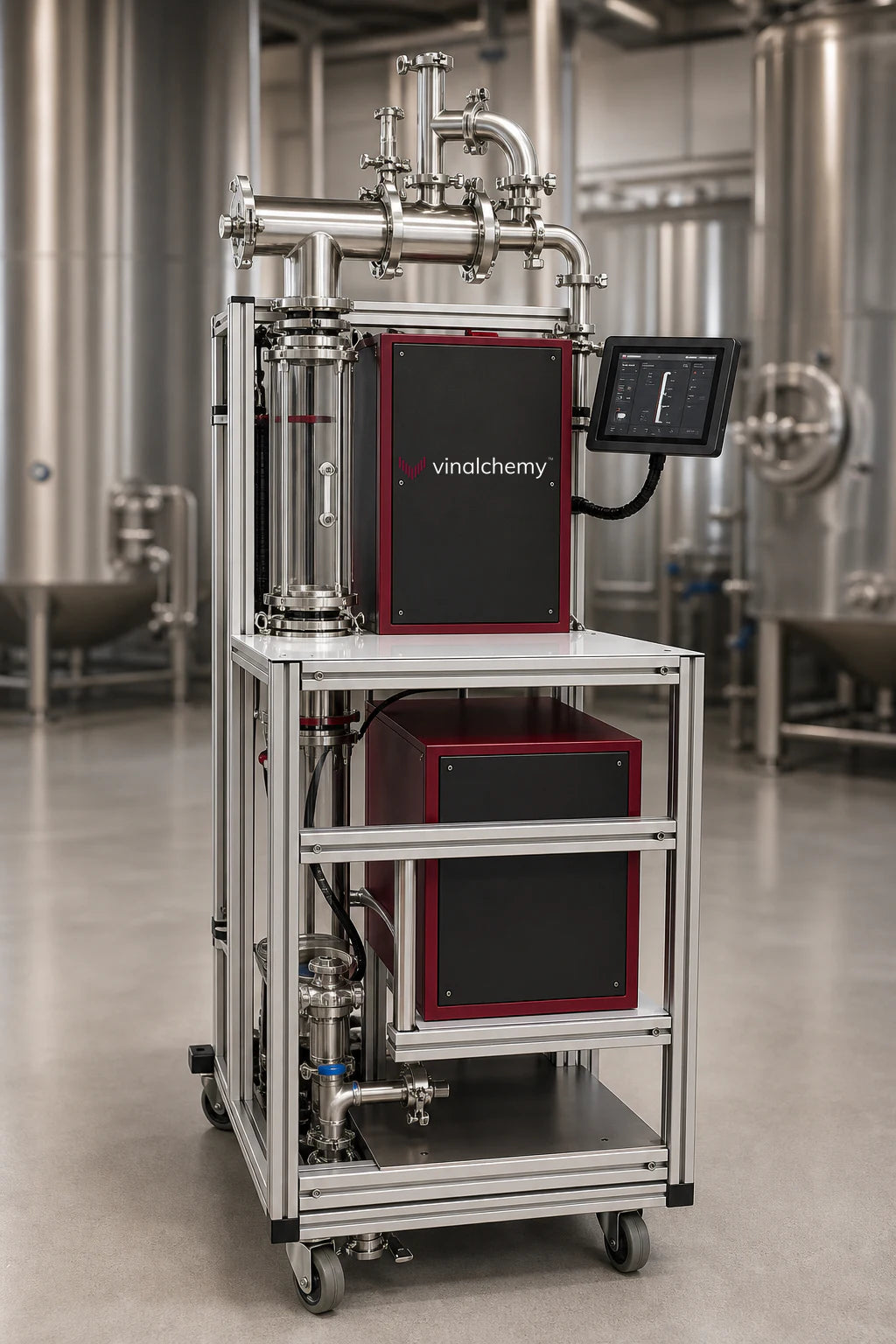
| Basic approach | Slow oxygen addition to wine held in a tank | Controlled gas-reaction treatment of flowing wine |
|---|
| Treatment period | Days, weeks or months | Immediate treatment outcome |
|---|
| Gas process | Oxygen dosing through a tank diffuser | Low-O₂ nitrogen carrier in a patented reaction zone |
|---|
| Oxygen behaviour | Dosed below the wine’s consumption rate over time | Dissolves and reacts immediately; nitrogen strips residual unreacted oxygen |
|---|
| Role of dissolved O₂ | Process guide for oxygen remaining or accumulating | Not the determining endpoint |
|---|
| Primary decision | Repeated taste, colour and laboratory review during the programme | Immediate taste, aroma and colour assessment of treated wine |
|---|
| When the result is clear | At or near the end of the programme | As wine leaves the VL250 |
|---|
| Trial relevance | Production wine continues changing while a slow trial runs | Actual wine is treated and assessed immediately |
|---|
| Ability to adjust | Adjust, then wait for further development | Adjust, sample and taste again immediately |
|---|
| Scale-up | Apply a programme in expectation of a future result | Transfer the exact approved VL250 treatment parameters to the V6000 |
|---|
| Production result | Emerges progressively | Reproduces the approved treatment result |
|---|
| Wine phases | Earliest phase is difficult and often avoided | Practical across wine phases, including the early opportunity |
|---|
| Wine styles | Used predominantly for red wines | Applicable to red, white, rosé, sparkling and fortified wines |
|---|
| Winemaker’s position | Monitors a prediction as it develops | Selects and approves the result before production |
|---|